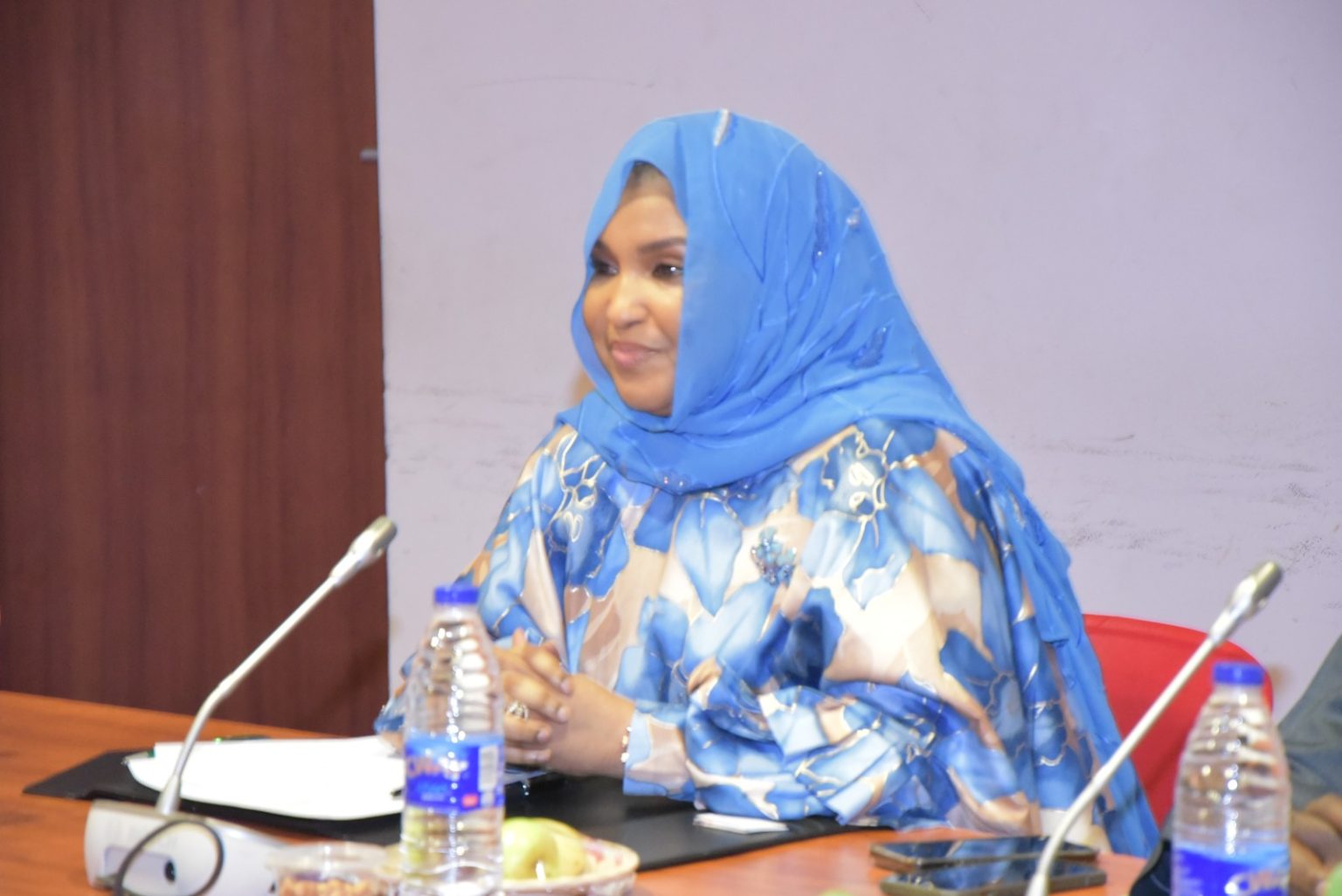
By Hafsat Abubakar Bakari | It is an honour and privilege to be here at this triple-header event: the graduation of the second cohort of the Policy Writing Fellowship, and the official unveiling of the Local Governance Accountability (LGA) Portal and the Policy Registry.
I commend Agora Policy for its commitment to evidence-driven and inclusive policymaking. From your report on “Options for Revamping Nigeria’s Economy” to your analyses on fiscal sustainability, climate, and gender inclusion, your work consistently provides government actors with rigorous, actionable alternatives. Today’s event is further testament to your role in bridging data analysis and practical statecraft.
We also owe gratitude to the MacArthur Foundation; a steadfast partner in institutional transformation in Nigeria. Your support for initiatives targeting corruption, justice sector reforms, and civic accountability reflects a clear understanding: to fix Nigeria’s systemic challenges, we must build the intellectual and technical capacity of those who design and monitor our policies.
Effective policies are the bedrock for the administration and implementation of government plans and objectives. Without analytically-sound and legally-grounded policies, the grandest visions of government remain mere aspirations. Policy gives direction, sets the rules of engagement, and creates measurable benchmarks for accountability.
This is especially true in the domain of Anti-Money Laundering, Countering the Financing of Terrorism, and Countering Proliferation Financing (AML/CFT/CPF). Nigeria is currently updating its National Risk Assessment, a major multi-agency undertaking that will directly inform the update of Nigeria’s National AML/CFT/CPF Strategy and Action Plan. These are foundational steps as we prepare for Nigeria’s Mutual Evaluation by GIABA in 2027, which will assess both our technical compliance and the effectiveness of our regimes.
To the Graduating Cohort: Nigeria needs your intellect. We look forward to seeing the strategic policy contributions this cohort will make to Nigeria’s AML/CFT/CPF frameworks. I challenge you to apply the analytical rigour you have honed here to help us design policies that close the financial loopholes exploited by terrorists, economic saboteurs, and corrupt actors. Your research must move from these halls into the corridors of state policy.
The LGA Portal could not be timelier. It aligns with the Federal Government’s drive to grant local government full autonomy to deliver the true dividends of democracy directly to the grassroots. For the NFIU, it will be invaluable: enabling the profiling of individuals and local government officials, providing structured access to financial allocations to local councils from 1999 to date, and supporting the analysis of typologies and trends between sudden surges in sub-national allocations and unusual financial transactions. It will also enhance intelligence-sharing with competent authorities such as the Nigeria Police, CCB, EFCC, ICPC, and financial sector regulators.
In the same vein, the Policy Registry is a commendable initiative; a one-stop hub for vital policy documents long overdue in Nigeria. I would like to make a formal recommendation to the leadership of Agora Policy: that the Policy Registry should feature a category dedicated specifically to AML/CFT/CPF so that we can effectively mainstream these requirements across all sectors of the Nigerian economy, so that any researcher studying financial inclusion, infrastructure, or the digital economy can immediately see the corresponding compliance requirements. This will significantly strengthen Nigeria’s overall mitigation architecture.
In closing, I congratulate the leadership of Agora Policy and the MacArthur Foundation for these timely interventions, and to our graduating fellows: you are leaving this programme at a critical epoch in Nigeria’s developmental journey. Thank you all, congratulations once more to the graduates, and God bless the Federal Republic of Nigeria.
*Excerpt of goodwill message delivered on behalf of Hajia Hafsat Abubakar Bakari, the Chief Executive Officer of the Nigerian Financial Intelligence Unit (NFIU), at the event by Agora Policy on 25th June 2026.