- Details
-
 By Agora Policy
 - Blog
- Hits: 1804
Let’s start with the obvious: climate change still does not enjoy the prominence that it deserves in Nigeria. Yes, there are some individuals, organisations and government agencies that are making a strong case for, and designing and implementing, consequential climate interventions in the country. We salute them. We thank them.
But the sad, inconvenient truth is that climate change still does not rank very high on our policy agenda and in our popular imagination. Both in official circles and among the populace, climate issues are not seen as really important and urgent. Our national attitude oscillates between denial and indifference.
Most of our people, including highly-placed government officials, see climate change as other people’s problems or an issue that is only for tree-huggers and environmentalists, or something that should bother only those who have the luxury of not wrestling with hunger and other existential matters—as we say in Pidgin, “somtin for pipu wey don belleful.”
And because we are a people of fantastic faith, we simply think and believe that the negative impacts of climate change will never be our portion.
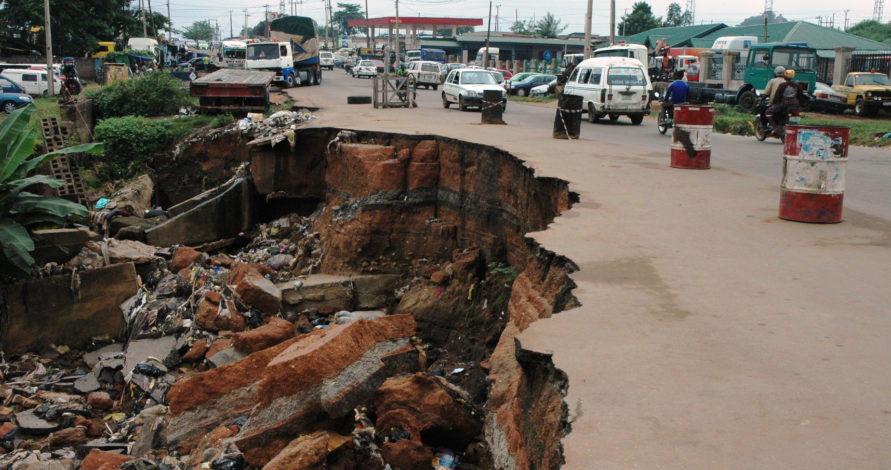
But the burdens of shifts in climatic conditions are already our portion. They are all around us. The rise in temperature, the irregular raining patterns, the near perennial flooding across the country, the increasing threats of desertification and gully and coastal erosions, and others already have deep, negative impacts on food production, food security and food inflation, and on water, on health and productivity, on energy and infrastructure, and on the conflicts that continue to multiply partly on account of vanishing natural resources.
Whether we want to accept it or not, whether we think it is other people’s or our own headache or not, whether we think it is our portion or not—climate change is already exerting a big toll on the things we consider critical and urgent. It is already here and now, not a matter of the hereafter. It is not what we can simply wish away by faith.
And because of its multi-dimensional, ramifying nature and multiplier effects, climate change is the most existential threat that we face already. And it is projected to get significantly worse within a few years. This silent crisis of today is likely to escalate into a catastrophic one soon—unless we act urgently, intentionally, and boldly.
There are additional reasons for greater urgency. We are a resource-intensive but ironically energy-poor country. The global transition away from fossil fuels poses grave threats to government revenue at all levels and to our capacity to provide the much-needed power for homes and industries.
Our capacity to fight poverty and achieve the SDGs and to increase national productivity and competitiveness may be further compromised. The transition away from fossil fuels may appear paused for now in the aftermath of Russia-Ukraine. But it won’t be paused for long.
In a related but significant vein, the energy transition is creating a new economy, an intense scramble for critical minerals already spurning instability around us, and a strategic positioning by countries to ensure that their interests are well served in the emerging economic order.
Where are we as a country in all of this? That’s a question for all of us to answer.
But let’s get this straight: we cannot afford to be a bit player in the emerging order except we are content with holding the short end of the stick or happy to be further consigned to the margins of existence.
We therefore need to see climate change as the central development challenge for our country, not in the future, but today.
And we need more than a conversation or the commitment of the converted. We need an all-of-society approach. From political authorisers to policy wonks to the ordinary persons on the streets and in the homes, we all have roles to play, and we all need to act differently.
*Excerpt from the welcome address by Waziri Adio, Founder/Executive Director of Agora Policy, at the policy conversation held on 22 November 2023 in Abuja.
Read more: Climate Change: Nigeria Needs to Snap Out of Denial and Indifference

- Details
-
By Agora Policy
- Blog
- Hits: 1935
Climate change is increasing hunger, poverty, disease-burden, migration, conflict and insecurity in Nigeria. It is damaging infrastructure, changing Nigeria’s coastlines, fuelling desertification, producing water scarcity, facilitating erosion and resulting in the loss of revenue for states and the national government. The total economic cost of climate change to Nigeria was estimated at $100 billionby 2020 and is projected to rise to $460 billion by 2050. Climate change may also cause Nigeria to lose trillions of dollars in stranded assets.
With these far-reaching negative effects on Nigeria’s human and natural systems, climate change has the potential to jeopardise the country’s economic development and alter its geographical, social, and political trajectory for decades or centuries. Some of the repercussions of climate change on the nation may be irreversible. Therefore, it should be evident that climate change is not a marginal or peripheral issue that the government and the people of Nigeria can take lightly.
Even though climate change poses significant threats to Nigeria’s economic development, it also presents an opportunity to further diversify the economy, expand the country’s energy portfolio, address energy security concerns, and increase global economic competitiveness. To transform climate change from a significant threat into an opportunity requires deliberate planning supported by immediate, bold and courageous action.
There is evidence that successive Nigerian governments recognise the enormous threat of climate change and the necessity for action, as indicated by a plethora of policy declarations, documents, and a national climate change law. However, actual action is still behind schedule. The government has not yet established a clear roadmap for the effective and comprehensive implementation of key policies and commitments, and there are no clear budgetary provisions for their implementation.
Transitioning to a green economy is a complex endeavour that requires meticulous planning, stakeholder participation, and a dedication to sustainable development. Leveraging climate action to pursue economic development in Nigeria is not only a viable but essential strategy. Incorporating climate considerations into economic development strategies can result in more inclusive and sustainable growth.
Such a move can provide Nigeria with excellent opportunities to construct a climate-resilient economy that not only promotes growth and reduces poverty, but also creates good green jobs and contributes to the reduction of greenhouse gas emissions and environmental sustainability. By proactively addressing the issue of stranded assets, Nigeria will also be able to position itself for a more resilient and prosperous future.
The emphasis should be on finding methods to industrialise and transition without substantially increasing the country’s emission profile. To accomplish this, Nigeria will need to implement mitigation and adaptation strategies that considerably enhance its macroeconomic stability, economic transformation and job creation, while minimising the negative impacts of climate change on development.
The global transition from a high-carbon economy to a low-carbon economy is already well underway through a multitude of international and national initiatives many of which are led by high-polluting industrialised nations that are keen to transform their economies and position their countries as net beneficiaries of the new global green economy. These strategies and investments will inevitably alter the global political, economic and geopolitical landscape, producing winners and losers across the world.
Whether Nigeria will swim or sink in the face of climate change and the global green growth transition will depend on its willingness to take urgent action now and re-align its national development strategies towards a low-carbon economic future.
*Excerpted from the latest Agora Policy report titled “Climate Change and Socio-Economic Development in Nigeria,” authored by Professor Chukwumerije Okereke, Professor Emmanuel Oladipo, Ms. Ifeoma Malo and Dr. Fola Aina.
- Details
-
By Agora Policy
- Blog
- Hits: 2039
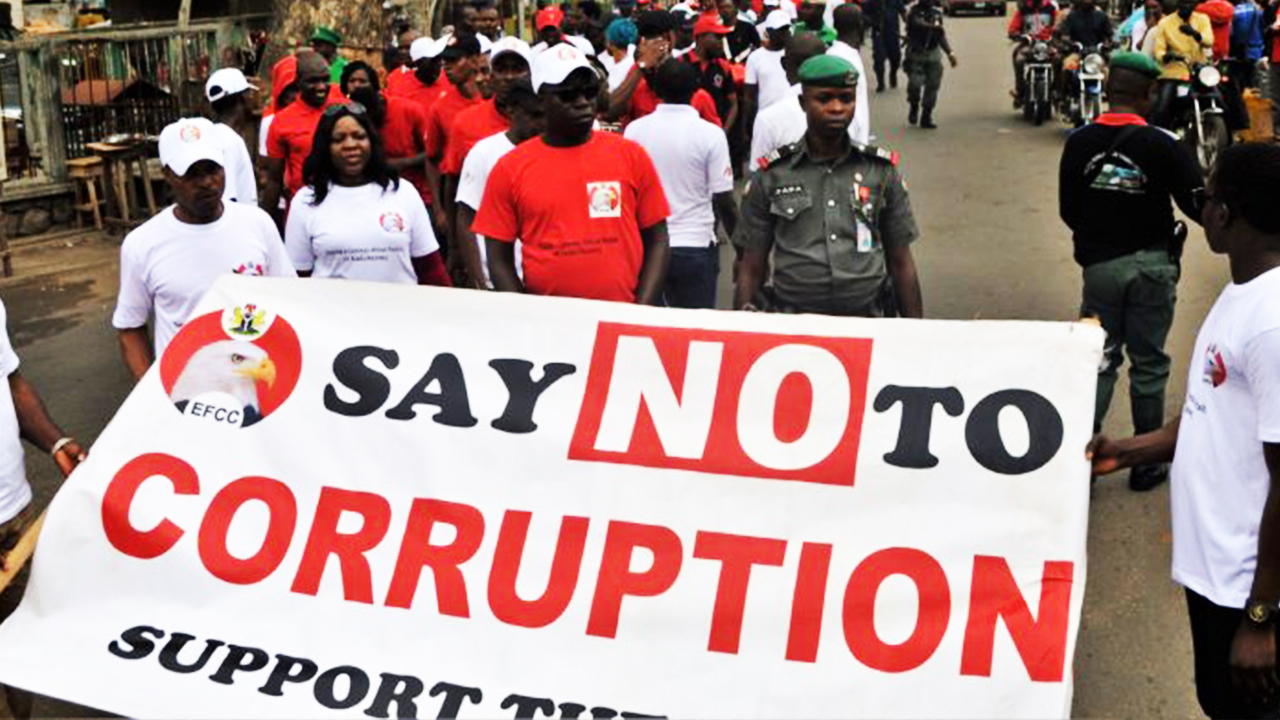
By Ifetayo Idowu | Corruption has for long been a pervasive issue in Nigeria. It has had devastating consequences for the country’s economy, security and social relations. Also, the scourge of corruption has reinforced negative patterns of poverty and inequality in both public and private sectors.
Over time, several measures have been implemented by different administrations to combat corruption in the country. While some of these measures have made some dent, most have not had the desired impact. The problem persists. Nigeria is still perceived as one of the most corrupt countries in the world, ranking 150 out of 180 countries in the 2022 Corruption Perception Index of Transparency International (TI).
Last week, Agora Policy released a report titled “Imperative of Strengthening Nigeria’s Transparency and Accountability Measures”i. Produced with the support of MacArthur Foundation, the report x-rays 16 anticorruption measures in the country and advocates for sustaining and strengthening Nigeria’s transparency and accountability measures. It concludes with this evocative line: “whether now or in the future, Nigeria needs more transparency and accountability, not less.”
This intervention builds on and fleshes out one of the recommendations of the timely report: the need to deploy insights from behavioural science to effectively tackle the values, attitudes and narratives that enable corruption in the country. In short, the need to nudge Nigerians away from the costly and destructive practice of corruption.
The Unbearable, Multidimensional Costs of Corruption
To begin with, we need to establish that the economic and social costs of corruption in Nigeria are extensive. According to PwCii, the cost of corruption in Nigeria is estimated to reach nearly $2,000 per person in 2023. The organisation also estimated that, if not properly dealt with, corruption could cost Nigeria up to 37% of GDP by 2030.
It was also reported that between 2009 and 2020iii, Nigeria lost 619.7 million barrels of crude oil valued at N16.25 trillion to theft and sabotage, which are forms of corruption. In contrast, the combined allocation for healthcare and education was N6.79 trillion less than the amount lost to these forms of corruption for the same period.
The social cost of corruption can be seen in how corruption perpetuates inequalities and povertyiv. It has a disproportionate impact on the poor and the most vulnerable members of society. It reduces the amount of money available for job creation, relief activities and government’s poverty alleviation programmes.
It also increases the cost of social services, including health and education, and reduces access of vulnerable members of society to these services. This reflects in unbuilt, poorly-built and poorly-equipped schools, ill-equipped and understaffed hospitals, and poorly-built roads which increase transaction costs and accidents and reduce human welfare. Corruption also creates a system where justice and safety are not prioritised leading to safety laws and due process being ignored and leading to unavoidable deaths.
Corruption has also led to a breakdown of social capital in Nigeria. Social capital allows a group of people to work together effectively to achieve a common purpose. Without it, society experiences a decline in social cohesion and an increase in crime, among many other things. This is bad for nation building.
In summary, corruption is not a cost-free or a victimless crime.
The Nudge Approach to Anticorruption
The gravity and the cost of corruption make it imperative for Nigeria to constantly look for more effective ways of taming the scourge. One relatively new approach that can be engaged in the fight against corruption in Nigeria is nudging, an approach popularised by Cass Sunstein, a Harvard University professor, and Richard Taler, a University of Chicago professor.
Nudging involves using insights from behavioural science to design and drive campaigns for changes in norms, values, attitudes and behaviours to achieve desirable outcomes. It can be an effective tool in the fight against corruption. Even though the act of nudging itself is not a new thing, using it as an anti-corruption tool is relatively newv.
Nudging can be used as a tool to change the context in which decisions are made. It can be used to influence the way people act, without constraining their choices. In this way, it can be used as a supplementary tool in fighting corruption. Nudging is a subtle and non-coercive method that influences people’s behaviour in a positive way. It involves using indirect suggestions to influence people’s behaviour and decision making.vi
Nudging can be used in many ways to fight corruption. One way nudging can be used in Nigeria is to fight prevalent mentality such as “public money is everybody’s money” which Nigerians use to justify taking and misallocating public money; “where you work is where you eat” which people use to justify treating their employers unjustly. These sayings help people reinforce bad behaviours. In the same way, anti-corruption slogans can be employed as a tool to help shape people’s opinions about corruption, sayings things such as “keep nothing under the table, except your shoes” or “Fight corruption. Bring progression” can be employed. The first expression reinforces the message that anything that cannot be done in everyone's view is corrupt and the other talks about the damaging effects of corruption. Nudging can be used to influence mindset.
Similarly, nudging can be used as a tool reminding people to act honestly. Like telling a child “thank you” for doing something they haven’t done as a reminder, people need to be reminded to act honestly. This can be done either directly by reminding people to do the right thing because their actions have consequences before meetings start, or by using more subtle means like making financial decisions during certain periods of prosperity, like after payday.
Directly reminding people of the consequences of their actions or inactions is another way of nudging. One way this can be done in Nigeria is by humanising corruption, drawing a direct line between a father’s poor level of education and his poverty or the connection between an amputee and poor state of infrastructure and not-upholding safety measures. Nudging can be used to promote more positive choices.
Nudging can also be used as a tool that incentivises the preferred behaviour. Public workers can be awarded certain benefits for being transparent. The Agora Policy report stated that in Nigeria’s history only eight public officials have publicly declared their assets. Even though this act promotes transparency, no applause or recognition was given to these individuals. There is nothing to distinguish them from the people who act otherwise. In using nudging as a tool to incentivise the preferred behaviour, wrong and bad behaviour must also be punished. This is because when people see their peers getting away with violations, they are likely to join the bandwagon. Nudging can be used as a tool that informs and empowers people.
In conclusion, nudging presents a promising approach to tackling corruption in Nigeria. It offers a psychological approach in that it deals with the root and behavioural causes of corruption and promotes a culture of transparency and accountability. By complementing traditional anti-corruption measures with nudging, Nigeria can effectively reduce the costs of corruption on its development and on its citizens. This will ultimately lead to a more equitable and prosperous country.
*Ifetayo is a policy and data analyst at Agora Policy
Footnotes
[i]Agora Policy No.4 (2023) Imperative of Strengthening Nigeria's Transparency and Accountability Measures. Available at: https://agorapolicy.org/report/
[ii]PWC (2016) “Impact of Corruption on Nigeria's Economy.” PricewaterhouseCoopers Limited. Available at: https://www.pwc.com/ng/en/publications/impact-of-corruption-on-nigerias-economy.html.
[iii]Aduloju, Bunmi (2022) “NEITI: Nigeria Lost N16.25trn to Oil Theft, Sabotage in 12 Years.” The Cable, December 15. Available at:https://www.thecable.ng/neiti-nigeria-lost-n16-25trn-to-oil-theft-sabotage-in-12-years
[iv]World Bank (no date) Combating Corruption, The World Bank. Available at: https://www.worldbank.org/en/topic/governance/brief/anti-corruption
[v]Slota, A. (2018) The subtle science of nudging anti-corruption, Palladium. Palladium. Available at: https://thepalladiumgroup.com/news/The-subtle-science-of-nudging-anti-corruption
[vi]Mullet, T. (2022) “What are the advantages and disadvantages of nudging?” Warwick Business School, 14 February. Available at: https://www.wbs.ac.uk/news/what-are-the-advantages-and-disadvantages-of-nudging/
- Details
-
By Agora Policy
- Blog
- Hits: 2186
By David Nwachukwu and Faith Adeniyi | Transparency and accountability are crucial for reducing opportunities for corruption in the public sector. This fact is not lost on various administrations in Nigeria, which have established various measures over the time to mitigate corruption and promote accountability and transparency. There has been a surge in the adoption and implementation of these sunshine measures since Nigeria returned to civil rule in 1999. But the result has been mixed. While some of these measures have been very successful, most have not made the expected impact. This forms the backdrop of the fourth policy report by Agora Policy, titled: ‘Imperative of Strengthening Nigeria’s Transparency and Accountability Measures’.
The report assessed 16 distinct transparency and accountability measures in the country within four clusters: Norms & Values, Public Financial Management, Open Disclosure, and Sanctions/Enforcement. It looks at the rationales, histories, challenges and records of these measures and makes recommendations for strengthening them. As the country gets ready for transition to a new administration, the report submits that “Nigeria needs more transparency and accountability, not less.”
Below are some of the key messages from the report:
Assets declared by public officials should be made public
The report contends that asset declaration by public officials is criticalto checkmating corruption in the public sector, if implemented effectively. The report claims that the potential of this measure is yet to be fully optimised largely due to lack of publication and verification of assets declared and limited capacity and resourcing of the Code of Conduct Bureau (CCB), the government agency charged with the implementation of the law. First, the calls for the amendment of Paragraph 3(c) of the Third Schedule of the 1999 Constitution of the Federal Republic of Nigeria. This provision empowers the CCB to make assets declared by public officials available to any citizen of Nigeria “only on terms and conditions as the National Assembly may prescribe”. According to the report, the refusal of the National Assembly to stipulate the condition for public disclosure has undermined the transparency and accountability utility of asset declaration, hence the recommendation for constitutional amendment.
The report also advocates for the verification of assets disclosed to CCB. It is believed that the disclosure and verification of the assets would prevent false declarations, deepen transparency and also increase trust in the government. However, at present, the CCB is undermined by limited budgetary allocations compared to other anticorruption agencies. This hampers the capacity of CCB and the Code of Conduct Tribunal (its sister agency) to adequately discharge their weighty responsibility of verifying assets declared by public servants across the three tiers of government and successfully prosecute those who err.
President Buhari should sign the new audit bill
The routine audit and legislative oversight of public accounts is a policy believed to regulate Government MDA’s expenditure and accounting to minimise incidences of corruption through internal and external audit processes overseen by the Office of the Auditor-General of the Federation (OAuGF). Despite the potential of this mechanism in promoting accountability and mitigating corruption in public service, many Ministries Departments and Agencies (MDAs) default in compliance, with the expected annual submission of their financial statements to the OAuGF and their counterparts in the states. The report states that without the power to sanction the Auditor-General is a ‘toothless bulldog’ and that Nigeria’s subsisting audit law is outmoded. Hence, the report recommends that President Muhammadu Buhari should sign the Federal Audit Service Bill into law before leaving office. It states: “the bill, which was passed by the National Assembly on 29 March 2023, repeals the Audit Ordinance of 1956. The bill strengthens the operations and independence of the Office of the Auditor General of the Federation (AuGF).”
Integrity checks needed on heads and staff of agencies with anticorruption mandates
Beyond corrupt practices found in various public offices, the report spotlights how the abuse of power by anticorruption agencies and public accounts committees have allowed corruption to thrive. In addition to bribe collection, “some civil servants have been reported to award multiple bids to contractors for some negotiated returns, while some even award contracts to their personal companies in violation of regulations against conflicts of interest.” All these acts are not in line with stipulated processes and should attract sanctions.
To address this gap, the report recommends integrity checks on the boards, leadership and staff of institutions with anti-corruption mandates and institute adequate safeguards on the exercise of oversight powers. The report states that, “these measures are needed to ensure that there is a symmetry between the mandates of these critical institutions and the values of those who work in and lead them, that there are measures for ‘watching the watchdogs’, and that the anti-corruption institutions are not undermined by the same ills that they were set up to tackle.”
Many MDAs don’t comply with government policies and without consequences
The report highlights how non-compliance across various MDAs has affected the successful implementation of anti-corruption measures. For instance, many MDAs default in compliance with the Freedom of Information (FOI) Act. Some MDAs also default in compliance with the expected annual submission of their audited financial statements to the OauGF. In 2020, the OAuGF reported that “65 MDAs had not submitted their financial statements for audit since January 12, 2017.” Similarly, not all public officials faithfully fill their assets declaration forms as required by law: on assumption of office, every four years, and when they exit. The report recommends strict enforcement of existing policies and adequate consequence management.
Need for a robust value/attitude re-orientation campaign
The report observes that most of the anticorruption measures are not delivering the desired impact because of a distorted and dysfunctional value system not just in the public service but also in the larger populace. To address this gap, the report advocatesfor a national re-orientation programme to instill anti-corruption values. The report advises the Federal Government to “launch a comprehensive and well-thought-out national value reorientation programme that creatively seeks to change the dysfunctional values, attitudes, and narratives that wittingly and unwittingly enable public corruption. The impact of the current emphasis on systems and sanctions will be limited without changes in societal values.”
Investments in technology and capacity could be game-changers
The report considers technology the greatest enabler of transparency and accountability. It thus highlights the need for continuous investment in technology and training for anticorruption agencies. The report points out that, “technology can be leveraged to enhance transparency across the diverse Public Financial Management (PFM) and open disclosure clusters where e-payment and electronic collection and dissemination of information have become a huge issue of concern.” While advocating for the adoption of technology in other areas of the anticorruption work, the reports encourages government to stick to and improve existing technology platforms. The reports states: “Thus, rather than contemplate the idea of going back on technology-driven platforms such as GIFMIS, IPPIS and the rest, the focus should be on how to improve their deliveries and build capacity for more effective use to strengthen transparency and accountability.
In related vein, the report advocates for more investment in capacity building for the staff of anticorruption agencies. According to the report: “capacity building to bridge gaps in technical knowledge and skills will go a long way to enhance the effectiveness of the relevant personnel in these institutions and, ultimately, strengthen transparency and accountability.”
The Whistleblower and other policies need legal backing
Introduced in 2016, the whistleblowing policy is an accountability and transparency mechanism designed to encourage confidential and voluntary reporting of suspected corrupt practices. Since its introduction, the policy has recorded notable milestones. For instance, the Presidential Advisory Committee against Corruption (PACAC) reported that “N594.09 billion was recovered in three years between 2017 and 2020 through the implementation of the whistleblower policy.”
With notable results as such, the report recommends the need for legal backing in order to make the policy more effective and most importantly, ensure its sustainability beyond the current administration. Subsequently, the report also calls for the protection of whistleblowers and employees of the relevant investigative agencies given the accompanying risk arising from the absence of adequate protection.
Amidst the positives of the policy, the report also makes the case for some adjustments. According to the report, “.... whistleblowing must be reviewed in order to checkmate abuses, victimisation and false accusations.” This argument is not far-fetched given some of the perverse incentives that could come with whistleblowing, including the monetary reward for whistle-blowers.
The report also recommends legal backing for the Open Treasury Portal (OTP), an initiative which potential for checkmating corruption launched by this administration.
*Nwachukwu is communication officer while Adeniyi is programme officer at Agora Policy

Agora Policy is a Nigerian think tank and non-profit committed to finding practical solutions to urgent national challenges.